Succulent Care Guide

Caroll Alvarado
| 28-07-2026
 · Plant Team
Succulents are admired for their distinctive forms, rich textures, and remarkable ability to thrive in dry conditions.
Their reputation as low-maintenance plants often leads people to believe they require very little attention, but healthy, long-lasting growth depends on understanding how these plants naturally grow.
Like all living plants, succulents respond to seasonal changes, and adjusting their care throughout the year helps maintain their shape, color, and overall vigor. By following their natural growth cycle rather than a fixed routine, you can create the conditions they need to flourish.
Understand Natural Growth Cycles
Succulents experience periods of active growth and dormancy, although the timing varies among species. Some grow more actively during warmer months, while others thrive in cooler seasons. Recognizing your plant's growth cycle allows you to provide care when it is most beneficial.
During periods of active growth, succulents generally require more frequent watering, bright light, and occasional feeding to support healthy development. During dormancy, growth slows naturally, reducing the plant's need for moisture and nutrients. Water only after the growing medium has dried completely, allowing the roots to remain healthy without prolonged exposure to excess moisture.
Water According to the Plant's Needs
Watering correctly is one of the most important aspects of succulent care. Because succulents store water in their leaves, stems, or roots, they are naturally adapted to withstand dry conditions far better than consistently wet soil.
Rather than watering on a fixed schedule, check the growing medium and water only when it is completely dry. Apply enough water to thoroughly moisten the soil until excess water drains freely from the bottom of the container. How often this is necessary depends on factors such as the species, temperature, humidity, available light, container size, and growing medium.
Containers with drainage holes are essential because they allow excess moisture to escape efficiently. If the leaves become soft, translucent, or unusually swollen, reduce watering and allow the growing medium to dry completely before watering again.
Provide Bright, Appropriate Light
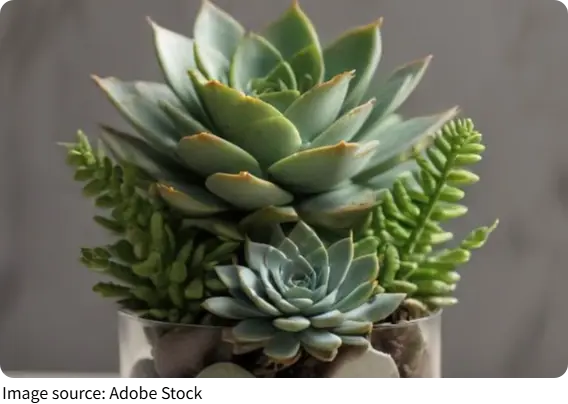
Light plays a vital role in maintaining compact growth, healthy foliage, and vibrant color. Most succulents perform best in bright conditions, although their exact light requirements vary among species. Many benefit from several hours of gentle direct sunlight each day, while others grow best in bright, filtered light.
When a succulent becomes tall with widely spaced leaves, it is usually responding to insufficient light. Relocating the plant to a brighter position or providing supplemental lighting can encourage stronger, more compact growth. Rotating the container regularly also promotes balanced development by ensuring all sides receive similar light exposure.
Choose the Right Growing Medium and Container
Healthy roots begin with excellent drainage. Standard potting mixes often retain more moisture than succulents require, making a fast-draining growing medium the better choice. A growing mix specifically formulated for succulents or another well-draining blend helps maintain the balance between moisture retention and airflow around the roots.
Repot your succulent when it outgrows its container or when the growing medium begins to break down, preferably during its active growing season. Select a container only slightly larger than the root system, as oversized containers tend to hold excess moisture. Unglazed clay containers are also an excellent option because their porous surfaces allow moisture to evaporate more readily, helping the growing medium dry at an appropriate rate.
Avoid Common Care Mistakes
Many succulent problems result from routine habits rather than difficult growing conditions. Watering according to the calendar instead of checking soil moisture is one of the most common mistakes. Observing the condition of the growing medium before watering provides a much more reliable guide.
If leaves begin to discolor, soften, or drop, review the plant's watering routine, lighting conditions, and growing environment before making adjustments, as several factors can produce similar symptoms. During periods of active growth, a balanced fertilizer may be applied according to the manufacturer's instructions if additional nutrients are needed. During dormancy, fertilization is generally unnecessary because growth naturally slows.
Observe and Adjust Throughout the Year
Successful succulent care is built on observation rather than routine. Seasonal changes in temperature, daylight, and growth naturally influence how much water, light, and attention a plant requires. Monitoring these changes and responding accordingly helps prevent common problems while supporting steady, healthy growth.
Small adjustments made throughout the year often have a greater impact than frequent interventions. Paying attention to your succulent's appearance and growth habits allows you to respond to its changing needs before minor issues develop into larger ones.
Thriving succulents are the result of consistent care guided by the plant's natural growth patterns. By understanding seasonal growth cycles, watering only when necessary, providing appropriate light, and using a well-draining growing medium, you can create an environment that supports healthy development year after year. With patience, careful observation, and thoughtful adjustments as the seasons change, succulents can remain vibrant, resilient, and attractive additions to any living space for many years.