Sea Otter Life & Skills

Caroll Alvarado
| 28-08-2026
 · Animal Team
Sea otters are highly adapted marine mammals that spend much of their lives in coastal waters.
Their dense fur, webbed hind feet, flexible bodies, and sensitive forepaws support the demands of an aquatic lifestyle.
From diving for prey to using small objects to open hard shells, their physical abilities and behavior make them distinctive members of marine ecosystems.
Life in Coastal Waters
Sea otters are commonly found in coastal marine habitats where they can forage and rest. They are capable swimmers and can dive underwater to search for food before returning to the surface.
Their broad, webbed hind feet provide propulsion, while their flexible bodies help them change direction and move efficiently through the water. Because they have limited body insulation compared with many other marine mammals, their dense fur plays a central role in maintaining body temperature.
A Specialized Coat
Sea otter fur is exceptionally dense and provides insulation by trapping air close to the skin. This adaptation helps protect the animal from heat loss in cold water.
Grooming is therefore an important part of daily life. Sea otters use their forepaws to clean, separate, and arrange their fur, helping maintain the coat's insulating properties.
Finding and Handling Food
Sea otters eat a wide variety of marine invertebrates, including clams, mussels, snails, sea urchins, and other available prey. They search for food underwater and use their sensitive forepaws to locate, grasp, and manipulate it.
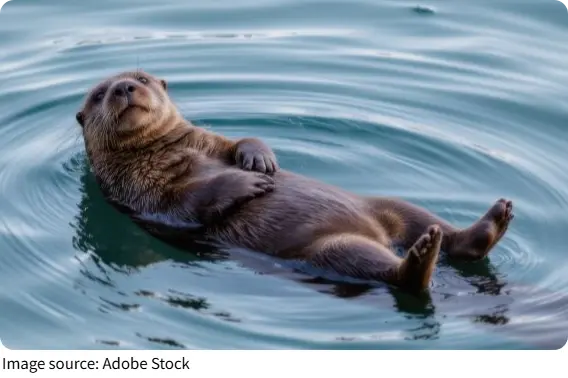
Once they reach the surface, they can eat while floating on their backs. This position gives them a convenient platform for handling food.
Remarkable Tool Use
Sea otters are among the marine mammals known for regular tool use. An individual may use a small rock or another hard object to break open difficult prey.
The otter can hold the prey against its chest and strike it with the object using its forepaws. Loose folds of skin beneath the forearms can also serve as temporary storage areas for food or a small tool while diving.
Tool use can vary among individuals and populations, reflecting differences in available prey and local conditions. It is a notable example of behavioral flexibility in a marine mammal.
Sensitive Forepaws and Whiskers
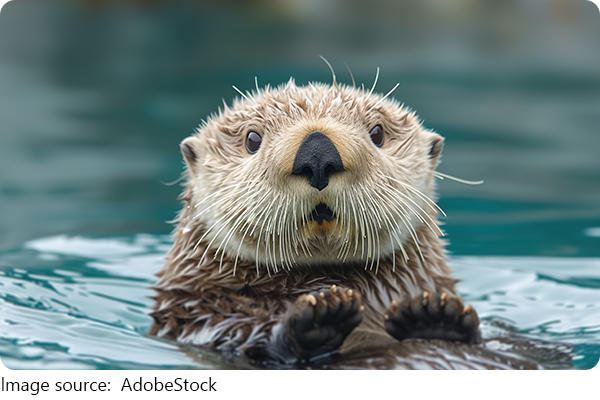
Sea otters rely heavily on their forepaws when feeding and grooming. Their sensitivity and dexterity allow them to handle small objects and prey with precision.
Their whiskers provide additional sensory information, helping them detect and identify objects while searching for food. These sensory abilities are particularly useful when visibility is limited underwater.
Resting at the Surface
Floating on the back is a characteristic part of sea otter behavior. The position allows an individual to rest while remaining at the surface and also provides a convenient posture for grooming and eating.
Sea otters may alternate between diving, feeding, grooming, and resting throughout the day, depending on their needs and surroundings.
Mothers and Pups
Sea otter mothers provide extensive care during the early development of their pups. Young otters depend on their mothers while building the physical abilities needed for independent life.
As pups grow, they gradually improve their swimming, diving, and foraging skills. This development eventually allows them to search for and handle food without the same level of maternal assistance.
Their Ecological Role
Sea otters affect coastal ecosystems through their feeding activities. By consuming marine invertebrates, they can influence the abundance of species within their habitat and contribute to interactions among different organisms.
Their position within coastal food webs makes their feeding behavior an important part of the communities where they live.
A Highly Adapted Marine Mammal
Sea otters combine specialized anatomy with flexible behavior to meet the challenges of marine life. Their dense fur provides essential insulation, their hind feet support powerful swimming, and their forepaws allow precise handling of food and tools.
Their ability to forage underwater, groom efficiently, and use objects to access difficult prey highlights the remarkable adaptations that allow sea otters to live successfully in coastal environments.