Navaratri Facts to Know

Liam Reilly
| 20-09-2026
 · Travel Team
Navaratri is a nine-night celebration known for its vibrant atmosphere, music, dancing, seasonal gatherings, and varied regional traditions.
Although the way it is observed can differ considerably from one community to another, several features help explain why the event has become such a recognizable part of Indian cultural life. Here are five useful things to know about Navaratri and the traditions surrounding it.
1. The Celebration Lasts Nine Nights
One of the easiest features to recognize is right in the name. Navaratri refers to a period of nine nights, with the festivities traditionally continuing across nine days and nights. The autumn observance is generally held around September or October and is among the more widely observed Navaratri periods.
However, there is not just one Navaratri during the year. The Hindu American Foundation explains that Navaratri periods occur four times annually, with the spring and autumn observances among the more widely celebrated. This means the timing can vary depending on which observance and regional tradition is being followed.
2. Different Regions Celebrate Differently
Navaratri does not look exactly the same everywhere. Regional communities have developed their own ways of marking the occasion, creating a celebration with considerable cultural variety.
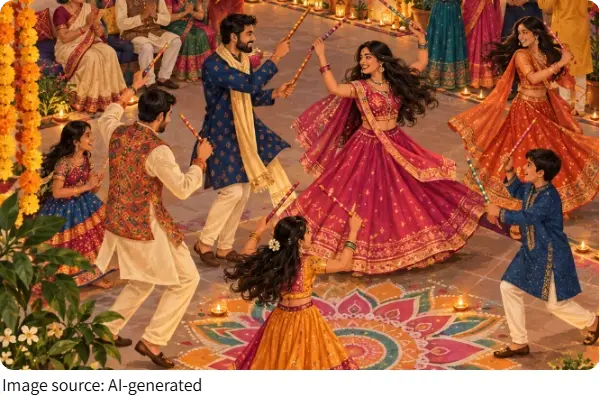
In some places, gatherings focus on music and dance. Other communities create decorative displays or organize family-centered events. The Hindu American Foundation notes that some households create elaborate Golu displays, featuring arranged figures and scenes, while other communities place greater emphasis on dance gatherings such as Garba. This regional diversity is an important part of understanding Navaratri. There is no single format that represents every community.
3. Garba Is a Major Cultural Highlight
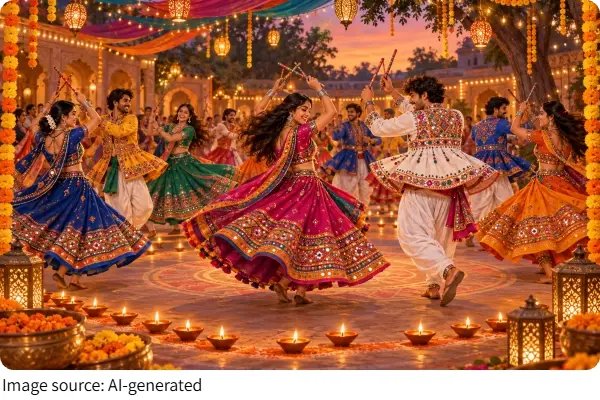
Among the best-known public traditions connected with Navaratri is Garba, a folk dance associated especially with Gujarat. Participants traditionally move in coordinated circles while following rhythmic musical patterns.
Modern Garba events can bring together large groups of people, creating lively community gatherings that combine movement, music, colorful clothing, and social interaction. The dance is often performed around a central lamp or decorative object, giving the gathering a distinctive visual arrangement. For many participants, Garba is also an opportunity to meet friends and family members, enjoy live performances, and take part in a shared cultural experience.
4. The Number Nine Has Special Importance
The number nine appears throughout the structure of Navaratri. The celebration traditionally extends over nine nights, and some traditions connect each night with a different form or aspect of the feminine divine.
Other traditions organize the nine days into three groups of three. In these observances, different themes are associated with successive three-day periods. Because practices vary, the meaning assigned to each period can differ between communities.
This variety is worth remembering when learning about Navaratri. Two families or communities can observe the same nine-night period while emphasizing different stories, activities, or cultural practices.
5. Participation Can Take Many Forms
Navaratri can involve a wide range of activities, depending on personal choice and local tradition. Some people take part in community gatherings, while others spend more time with family or attend cultural events. Dance is particularly visible in public celebrations, but music, decorative displays, shared meals, and seasonal gatherings can also form part of the experience.
The Hindu American Foundation describes the celebration as highly varied, with some communities emphasizing spiritual practices while others focus more strongly on cultural events and social gatherings. This flexibility helps explain why Navaratri can have different appearances from one region or household to another. The same nine-night period can bring together traditions that are closely connected while still retaining their local character.
Navaratri is best understood as a celebration with many regional expressions rather than a single uniform experience. Its nine-night structure, varied local traditions, Garba performances, emphasis on the number nine, and community activities all contribute to its distinctive character. Learning about these differences offers a clearer picture of why Navaratri continues to be an important part of cultural life for many communities.