Maple Trees: Fun Facts
Mukesh Kumar
| 20-11-2026
 · Plant Team
Hello, and thank you for reading. You probably know maples as the trees that paint hillsides orange every fall, or as the source of the syrup you pour on pancakes.
But maples are stranger and more varied than that picture suggests, and a few of their habits are genuinely surprising once you look closer.
Not every maple turns red
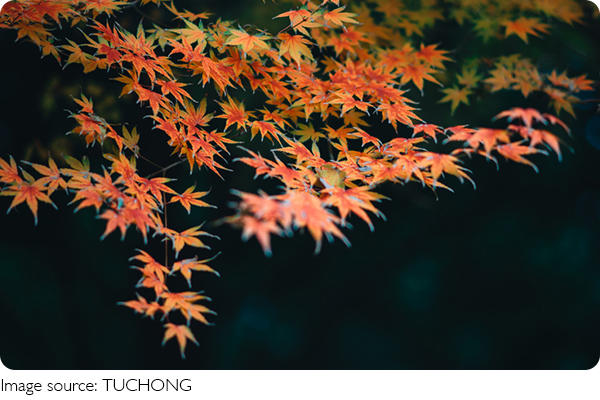
People expect all maples to blaze crimson in autumn, but the color depends heavily on species and weather. Sugar maples lean orange and yellow, while red maples live up to their name in a good year. The shade also shifts with conditions: warm, sunny days followed by cool nights bring out the strongest reds, because that combination drives sugar production in the leaf. A wet, mild fall often leaves you with duller tones. So if you want the postcard look, you're partly at the mercy of the forecast.
Those winged seeds spin for a reason
Maple seeds come in pairs, each with a papery wing, and they're built to travel. When they drop, the wings make them spin, which slows the fall and lets the wind carry them farther from the parent tree. A single sugar maple can produce thousands of these seeds in a good year. You've probably seen them scattered on sidewalks in spring, sometimes still joined in a V shape. That design is one of the more efficient seed dispersal systems in the temperate forest.
Sap runs on a temperature swing
The syrup on your table starts as watery sap, and it only flows under specific conditions. You need freezing nights and above-freezing days, usually in late winter, for pressure to build inside the trunk and push sap up. Once the nights stay warm, the run stops. Producers tap trees and collect the sap, then boil it down hard. It takes roughly 40 gallons of sap to make one gallon of syrup, which explains the price. Vermont and Quebec are the big producers, and the season is short, often just a few weeks.
Maples are older than you'd guess
The maple family has been around a long time, and it's spread across a wide range of habitats. You'll find maples in North America, Europe, and Asia, from swampy lowlands to mountain slopes. The Japanese maple alone has been cultivated for centuries, with hundreds of named varieties bred for leaf shape and color. Some species are shade tolerant and grow slowly under a canopy, while others colonize open ground fast. That flexibility is part of why maples show up in so many different forests.
They do more than look pretty
Maple wood is dense and hard, which makes it useful for furniture, flooring, and cutting boards. Bowling pins and baseball bats have been made from it. The trees also support wildlife: the seeds feed squirrels and birds, and early spring flowers give pollinators something to work with before most other plants wake up. Even the leaves matter. They break down into leaf litter that feeds the soil, and a mature maple can drop a serious pile of them each fall.
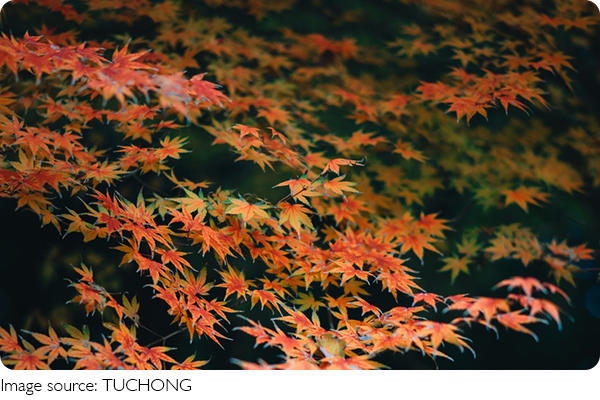
Next time you walk past a maple, look up at the leaves and check whether the seeds are still hanging on. The color, the spinning samaras, the sap that only runs when the nights freeze, all of it ties back to one tree you've probably passed a hundred times without a second thought.