Onigiri That Hold Together

Liam Reilly
| 19-11-2026
 · Food Team
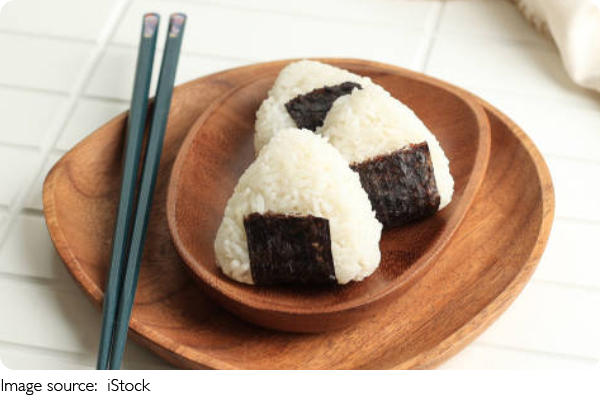
A rice ball looks like the simplest thing in the world, just rice pressed into a triangle with something hidden inside.
But plenty of first attempts fall apart the moment you pick them up. Making onigiri that stay together starts with choosing suitable rice and handling it gently. The method below covers preparing, filling, shaping, and packing them for lunch.
Ingredients
Japanese short-grain rice is what you want here, the kind often sold as sushi rice. Long-grain rice won't clump the same way, and your triangles may crumble. Start with the following ingredients:
- 2 cups uncooked Japanese short-grain rice
- Water for rinsing and cooking, following the rice package instructions
- 1 teaspoon salt
- 2 cups water for wetting your hands
- 1 or 2 sheets nori seaweed, cut into narrow pieces
- Cooked salmon, flaked, for filling
Steps
Have a wide bowl, a small bowl for the salted water, and a tray ready before starting. Keep the prepared filling nearby so you can shape the rice while it is still warm:
1. Rinse the rice under cold water until the water runs mostly clear.
2. Cook the rice in a rice cooker or saucepan, following the package or appliance instructions for cooking water and any soaking or resting time.
3. Mix the teaspoon of salt into the bowl containing the water for your hands.
4. Transfer the cooked rice to the wide bowl and let it cool slightly, until comfortable to handle but still warm.
5. Dip your clean hands in the salted water and shake off the excess.
6. Take a small handful of rice into one palm.
7. Press a hollow in the center with your thumb.
8. Put a small amount of flaked salmon into the hollow.
9. Close the rice around the filling so none remains exposed.
10. Cup the rice in one hand and use the other to form a triangle, rotating it between gentle presses.
11. Wrap each ball in a piece of nori, or keep the nori separate until serving.
Fillings that behave
Wet, loose fillings leak and make shaping difficult, so pick something that stays put. Flake the cooked salmon with a fork before starting. Keep the filling amount small enough that the rice can close over it without leaving a gap.
If you're making several, set up a small tray and shape them one by one rather than assembling everything at once. Keep the remaining rice covered with a clean, damp towel while you work so its surface doesn't dry out.
The press that holds it
Your hands should be firm enough to hold the grains together without crushing them. Press too hard and the rice turns dense and chewy. Too softly and it falls apart. Rotate the rice as you press rather than squeezing repeatedly in the same place.
Nori absorbs moisture from the rice. Wrapping it immediately gives a softer covering; adding it just before eating keeps it crisp. If you're packing a bento, a small paper cup helps keep each rice ball separate and stops the rice from sticking to the box.
Packing it for later
Onigiri are best eaten the same day. For lunch later, cool them promptly, ideally within one hour, then refrigerate. Don't leave them sitting out for several hours. Close the bento lid once they have cooled so trapped steam doesn't leave condensation inside.
Wrap each one individually in food-safe plastic wrap if you're carrying it loose in a bag. Refrigeration can make the rice firmer, but keeping it covered limits drying. Keep the nori in a separate sealed bag if you want to add it at lunchtime.
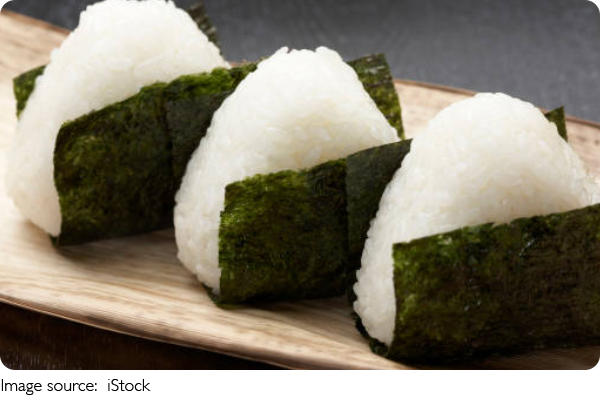
Serve the onigiri with cherry tomatoes and pickled vegetables on the side. Keep those accompaniments separate from any dry nori until you're ready to eat.